Supporting Community-Led Best Practice for Marine Wildlife Tourism
Location: Isabela Island, Galápagos Archipelago, Ecuador
Project partner: Galápagos Conservation Trust (GCT)
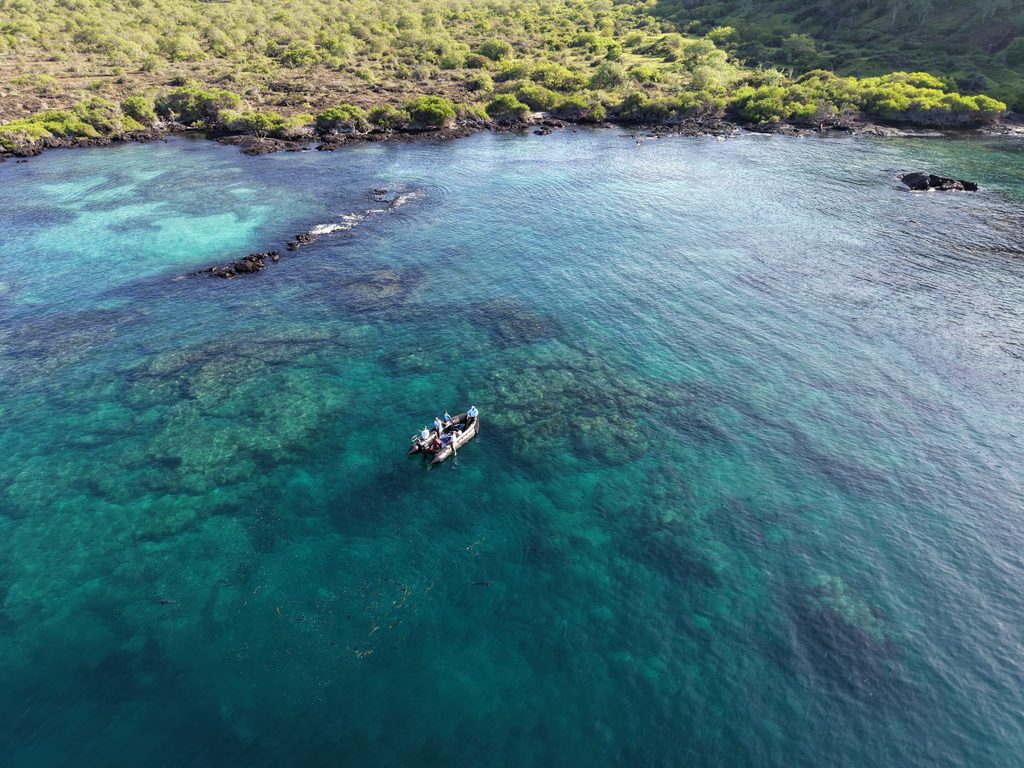
Image: Coastline and boat, Farah Hamden
Project Update, September 2026
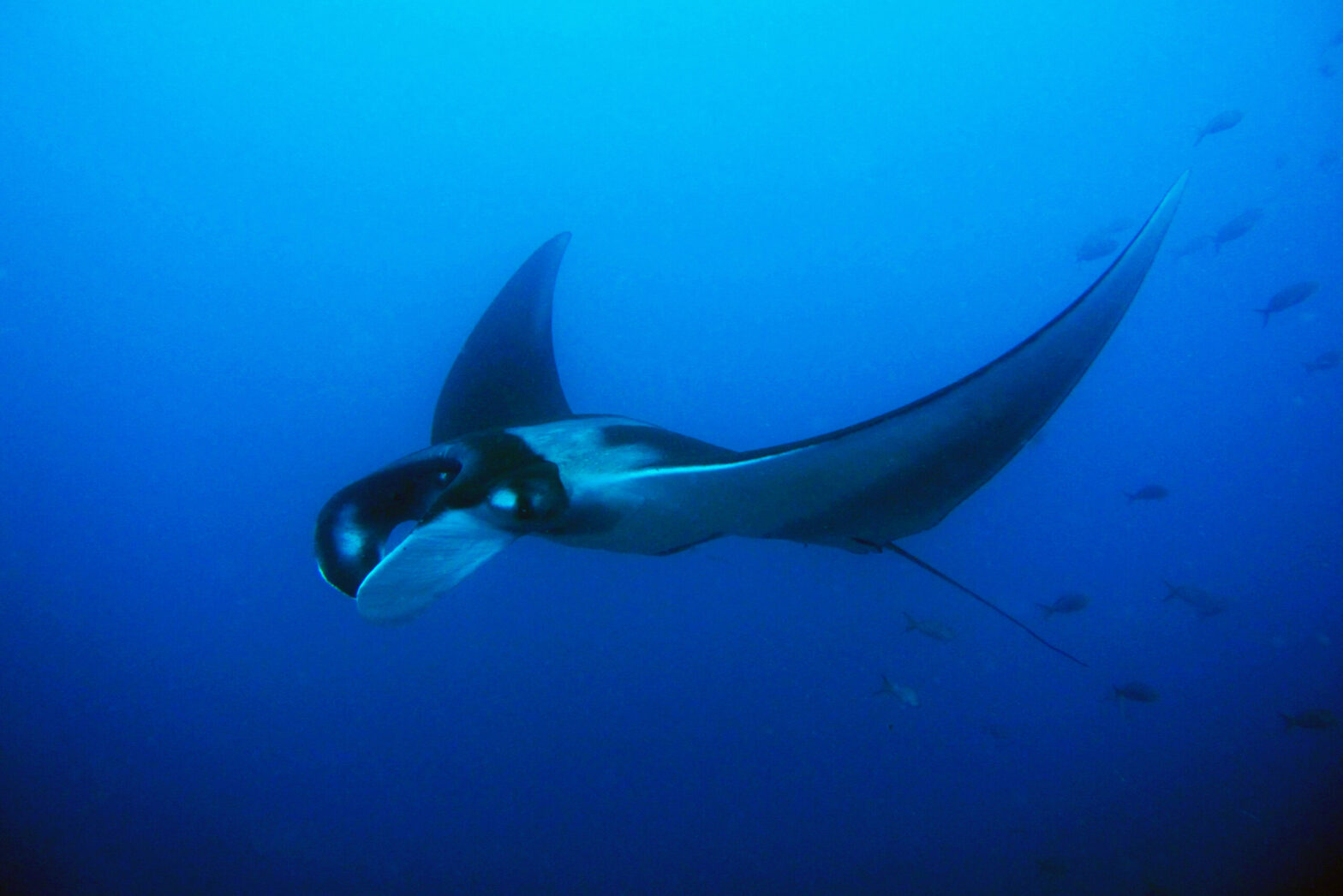
The LATA Foundation is supporting the Galápagos Conservation Trust, Dr Diana Pazmiño’s team at Universidad San Francisco de Quito (USFQ), and the Galápagos National Park Directorate (GNPD) to develop best-practice guidance for tourism around oceanic manta ray aggregation sites in the Galápagos Marine Reserve.
The project is focused on Los Túneles on Isabela Island, a popular marine tourism destination where increasing boat traffic could put endangered oceanic manta rays and other marine wildlife at risk of disturbance and boat strikes.
A key milestone has been the appointment of Jhonny Fuentes, a local USFQ student, as a Co-Galápagos intern. Hosted by local NGO FUNCAVID, Jhonny is supporting the project’s technical, scientific and educational activities, helping to strengthen local capacity and provide valuable early-career experience.
The research team has also consolidated GPS and aerial data collected since 2022 to map the overlap between manta ray aggregation areas and boat traffic routes. Fieldwork in March 2026 added to this baseline and produced the first data download from acoustic tracking receivers, providing new insights into manta ray movements around the island.
Alongside the scientific research, the project is engaging local stakeholders to understand current tourism practices and inform the development of practical guidance. A global review of existing research and best practice is also underway. Following an initial workshop in March 2026, the Galápagos National Park Directorate formally recognised the project’s framework and expressed interest in exploring how the approach could be scaled to protect marine megafauna across the Galápagos.
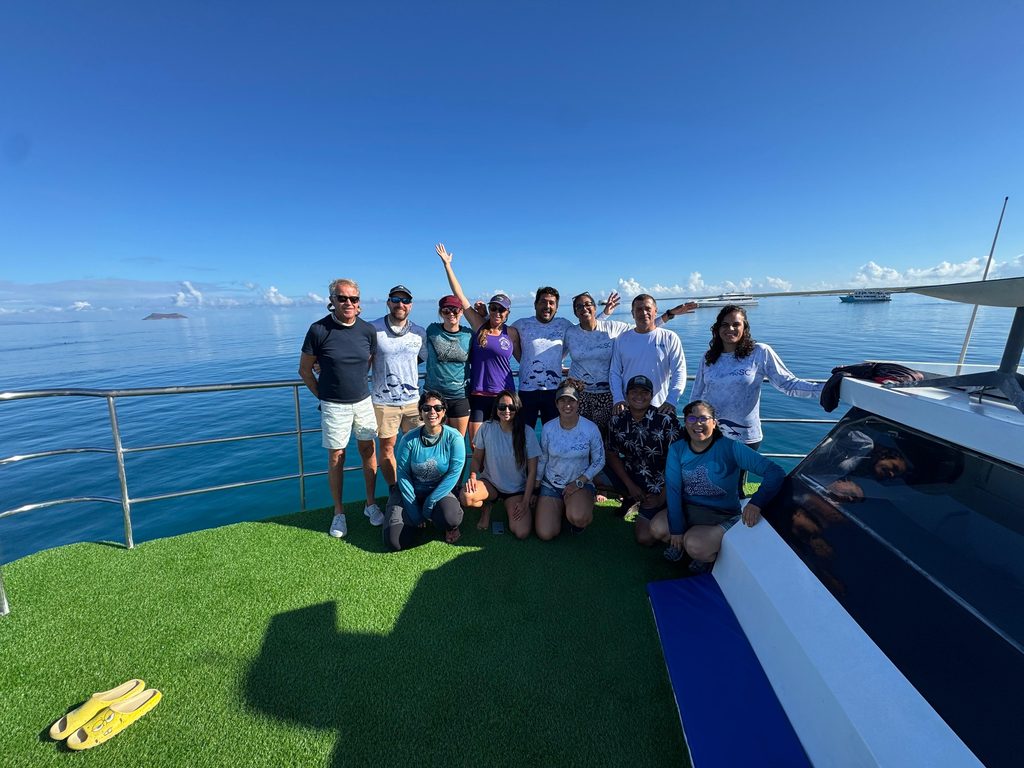
Image: Group photo, Kim Bassos
What the project is supporting
- Research into manta ray movements and the risks posed by boat traffic
- Development of community-informed best-practice guidelines for marine wildlife tourism
- A paid internship for a local early-career researcher
- Workshops with tourism operators, guides and community members
- Educational resources for Naturalist Guides and the local Gill Club girls’ science initiative
- Outreach and communications to raise awareness of manta ray conservation
Our aims
The project aims to:
- Reduce the risk of boat strikes and disturbance to manta rays and other marine wildlife
- Improve the quality and sustainability of marine tourism
- Strengthen local skills and employment opportunities
- Support the Galápagos National Park Directorate with practical, science-based tourism guidance
- Develop an approach that could contribute to wider protection of marine megafauna across the Galápagos
Why we are supporting this project
Marine tourism is an important part of the Galápagos economy, but increasing visitor numbers and boat activity can create new pressures for wildlife. By bringing together scientific research, local knowledge, tourism operators and conservation authorities, this project aims to develop solutions that protect marine wildlife while supporting sustainable livelihoods.
The project also provides an opportunity to test a community-led approach that could be applied more widely across the Galápagos, helping to ensure that tourism and conservation can develop alongside one another.