
Supporting Community-Led Best Practice for Marine Wildlife Tourism
Location: Isabela Island, Galapagos Archipelago, Ecuador
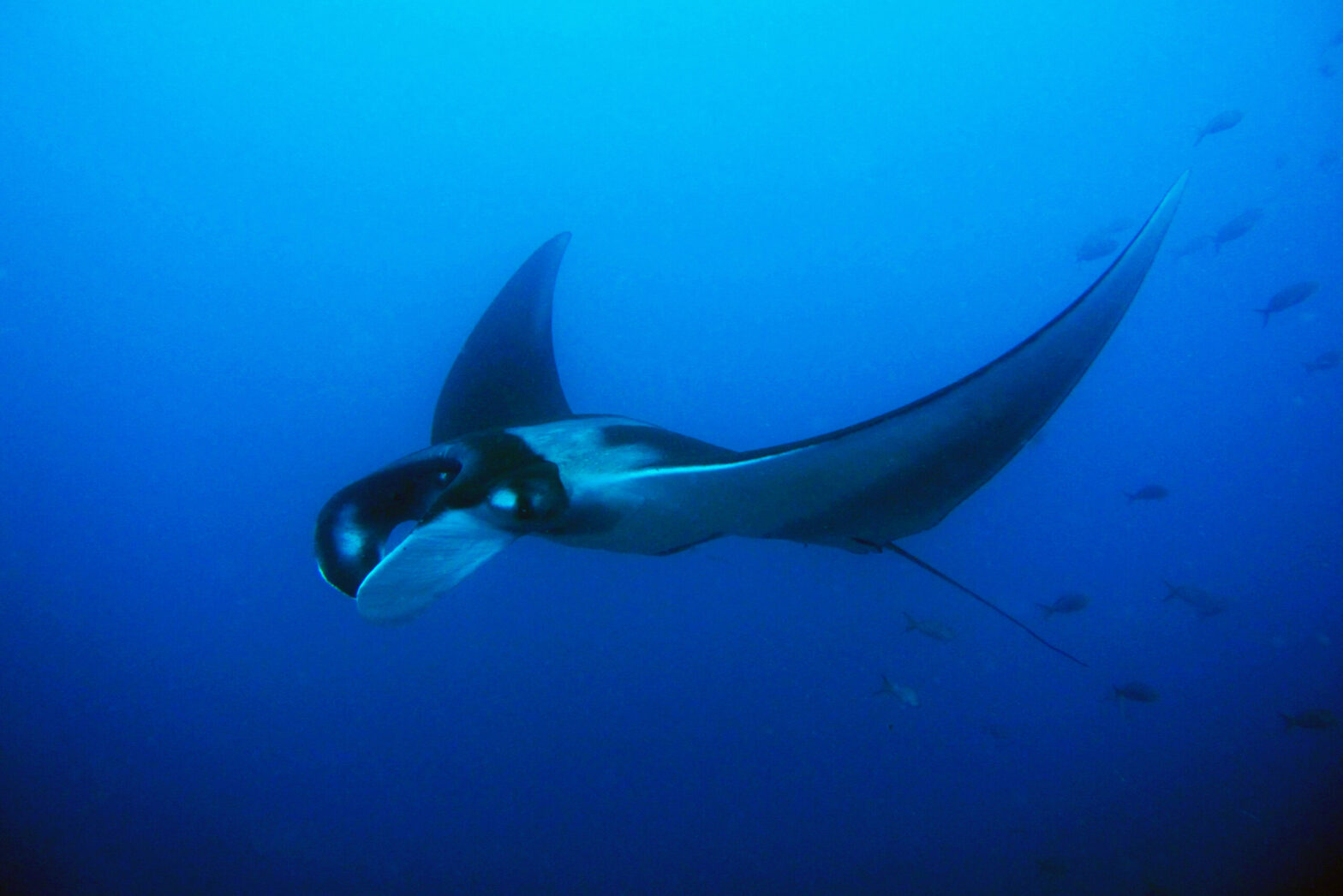
One of Isabela Island’s most popular marine tourism sites is located near a recently discovered aggregation of endangered oceanic manta rays. As land-based tourism continues to grow rapidly in Galapagos, increased boat traffic poses a serious risk to manta rays and other marine megafauna through collisions and disturbance.
Galapagos Conservation Trust are working closely with Dr. Diana Pazmiño, a scientist from Universidad San Francisco de Quito leading a multi-year study on oceanic manta rays in Galapagos, to launch a pilot project to co-design best-practice guidance for tourism around manta ray aggregation sites.
Working closely with local authorities, early career researchers and the Isabela community, solutions that protect wildlife while strengthening sustainable livelihoods will be developed.


Project Components
- Development of community-informed best-practice guidelines for tourism around manta aggregation areas
- A paid Co-Galapagos internship for a local early-career researcher
- Workshops and training for the local community
- Targeted education and outreach on manta rays
- Communications campaign to raise awareness among visitors and residents
Project Aims
- Reduce the risk of boat strikes and disturbance to manta rays and other marine species
- Improve the quality and sustainability of marine tourism experiences
- Strengthen local capacity and provide paid employment opportunities
- Support the Galapagos National Park Directorate to co-design applied, science-based guidance
- Contribute to a wider transition towards regenerative tourism in the Galapagos Islands
Expected Outcomes
- Best-practice manta ray tourism guidelines endorsed by the Galapagos National Park Directorate and adopted locally
- Local boat crews trained in safe wildlife interaction practices
- Improved knowledge and skills among tourism operators
- Increased awareness of manta ray conservation among naturalist guides, visitors and the Isabela community